




Eighteen months after Labour’s landslide victory, British politics has been turned on its head. Reform UK leads national polls, Labour trails in third behind the Conservatives in some surveys, and the Greens are projected to win more seats than the governing party. If voters went to the polls tomorrow, the result would be unlike anything seen in modern British electoral history.
The Polling Snapshot: Reform’s Commanding Lead
Multiple polling firms place Nigel Farage’s Reform UK decisively ahead of all rivals in early February 2026. Ipsos recorded Reform on 30 per cent at the end of January, eight points clear of Labour on 22 per cent, with the Conservatives on 19 per cent. The Greens and Liberal Democrats each polled 12 per cent.
Electoral Calculus, using MRP modelling based on January fieldwork, projected Reform on 31 per cent of the national vote. Their seat projection showed Farage’s party winning 335 constituencies, delivering a majority of 20 even after accounting for tactical voting against them.
A separate MRP model from More in Common placed Reform on track for 381 seats and a majority of 112, representing a landslide comparable to Labour’s 2024 victory. The firm’s analysis showed Reform making net gains of 94 seats in local elections, reinforcing their national momentum.
YouGov’s early February polling showed a narrower lead, with Reform on 24 per cent compared to the Conservatives on 20 per cent, Labour on 19 per cent, Liberal Democrats on 16 per cent and Greens on 14 per cent. The polling company has historically recorded lower figures for Reform than other firms, though even their numbers place Farage’s party in first position.
PollCheck’s seven-poll average as of 7 February calculated Reform’s support at 30 per cent, with Labour on 19.7 per cent, Conservatives on 18.6 per cent, Greens on 13.9 per cent and Liberal Democrats on 12.3 per cent.
The Seat Projections: A Political Earthquake
Electoral Calculus MRP modelling from January projects the Conservatives would fall to 92 seats from their current 121, whilst Labour would collapse to just 41 constituencies. The Greens under Zack Polanski are projected to win 52 seats, placing them ahead of the governing party for the first time in history.
The Liberal Democrats are forecast to secure between 40 and 50 seats, sufficient to make Ed Davey’s party potential kingmakers in a hung parliament scenario. However, Reform’s projected 335 seats would deliver Farage a working majority without requiring coalition partners.
The seat distribution represents a complete inversion of the 2024 general election, when Labour won a landslide on 24 per cent of the vote whilst Reform secured just five seats despite polling 14 per cent. The collapse of both major parties has created space for Reform to convert polling strength into parliamentary seats across constituencies they previously struggled to win.
What Drove Reform’s Surge
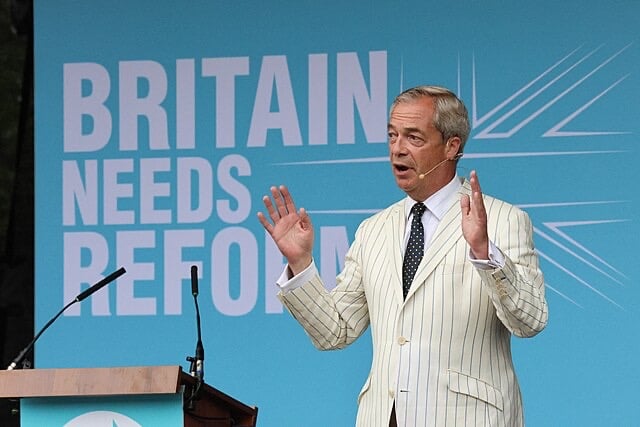
Reform UK’s rise from 14 per cent and five MPs in 2024 to poll-topping status reflects multiple factors combining to create anti-establishment momentum.
Nigel Farage’s return as leader in June 2024 proved transformational, with his media profile and political experience enabling the party to retain 80 per cent of its voter base compared to just 53 per cent loyalty among Conservative supporters. High-profile defections from the Tories, including Lee Anderson and former Chancellor Nadhim Zahawi in January 2026, signalled what analysts described as the Conservatives “ceasing to be a national party.”
Reform commands unmatched trust on immigration, their core policy pledge, whilst also attracting voters through promises of tax cuts and public spending reductions. Polling shows the party winning over low-income voters and those frustrated with mainstream politics, with between 26 and 34 per cent of former Conservative voters at risk of switching to Reform.
Labour’s multiple crises have bled approximately 10 per cent of their 2024 voters to Reform. The party has benefited from the Mandelson-Epstein scandal that exposed vetting failures in Keir Starmer’s government, alongside voter anger over economic pain and broken pledges. The Conservatives’ struggles to unite the right under Kemi Badenoch’s leadership have prevented them stemming the flow of support to Farage’s party.
Reform’s dominance in 2025 local council elections, where they secured the most gains of any party, built momentum heading into 2026. However, doubts persist about their readiness for government, with 58 per cent of voters disagreeing that Reform is prepared to govern and critics questioning their policy depth beyond immigration.

Labour’s Unprecedented Collapse
Prime Minister Keir Starmer faces the worst polling crisis of any recent British leader. His personal net approval rating has cratered to between minus 44 and minus 46, with over half the public now saying he should resign as Labour leader.
A LabourList/Survation poll of party members conducted on 3 February revealed Starmer would lose a leadership contest to Angela Rayner by 48 per cent to 37 per cent, or to Andy Burnham by 53 per cent to 37 per cent. He would barely beat Ed Miliband by 44 per cent to 41 per cent, though he would defeat Wes Streeting by 42 per cent to 30 per cent.
Multiple interlocking crises have eroded Labour’s 2024 landslide support within 18 months. Voters blame the party for soaring household costs, higher taxes, stagnant growth and a cost-of-living crisis that Starmer promised to fix but which has worsened. Polls show Labour and Reform neck-and-neck on economic trust, eliminating Labour’s traditional advantage.
The botched appointment and subsequent sacking of Peter Mandelson as US ambassador due to his Jeffrey Epstein ties exposed vetting failures, forced chief of staff Morgan McSweeney to resign, and amplified accusations of elite cronyism. Internal Labour polling shows deep rifts within the party, especially after the deputy leadership vote.
Starmer’s approval collapsed after his government failed to deliver “perceptible change,” with voters viewing him as out of touch. The party’s focus on “renewal versus grievance” has not stemmed the bleeding to Reform on the right and the Greens on the left.
In head-to-head polling with Reform, Labour under Starmer leads narrowly on the NHS by 39 per cent to 35 per cent but ties or trails on the economy and cost of living. A Reform spokesperson described Labour as “faltering” and untrusted on costs, whilst Starmer has admitted the “enormity of the challenge” whilst insisting his team has “conviction and courage.”

The Conservative Struggle
Kemi Badenoch’s Conservatives remain stuck in third place nationally at around 19 per cent, matching their immediate post-2024 position despite ongoing losses to Reform UK. The party faces an existential crisis as it haemorrhages support to Farage whilst failing to win back voters from Labour.
January MRP models project the Conservatives dropping to 92 seats from their current 121, behind Reform’s projected 335-seat majority but ahead of Labour’s 41. Badenoch fares better than Starmer in some head-to-head polling, leading by four points as preferred Prime Minister and holding a six-point advantage on economic trust over Labour, though she trails Farage overall.
The party’s 2024 landslide defeat on 24 per cent vote share triggered mass exits to Reform, with 26 per cent of 2024 Conservative voters switching to Farage’s party. Reform retains 80 per cent of its base compared to the Conservatives’ 53 per cent loyalty rate.
Badenoch has admitted she is “still learning” to lead whilst facing pressure over ECHR membership, migration policy and funding difficulties. Her focus on efforts to “unite the right” polls poorly, with analysts warning such positioning would shed approximately 10 percentage points through tactical backlash from centrist voters.
The Conservatives appeal to some Reform-leaning demographics including older homeowners, with between 26 and 32 per cent support among these groups. However, Farage dominates among low-income voters and those who did not vote in 2024. The Conservatives lead on taxation and economic competence but lag significantly on immigration, Reform’s strongest issue.
Some analysts suggest gains on spending control and stability compared to Labour’s “weak government” are helping slightly, urging the party to focus on economic credentials and leadership to claw back support from Reform without alienating remaining centrist voters.

The Green Surge Under Polanski
The Green Party of England and Wales under Zack Polanski is polling in double digits nationally, ranging between 11 and 13 per cent in recent January-February surveys. This represents a notable rise from their seven per cent showing in 2024 and places them ahead of Labour in some seat projections.
A January Survation poll recorded the Greens steady at 11 per cent, having hit double digits for the first time in late 2025. Electoral Calculus MRP modelling from January projects them on 12 per cent of votes and 52 seats, ahead of Labour’s projected 41 seats, due to concentrated support in urban, progressive areas.
YouGov polling around 4 February reportedly showed them spiking to 17 per cent, their highest level ever recorded, though this may reflect local election momentum rather than sustainable national support. Polanski’s personal approval as leader shows 31 per cent saying he is doing well, with 25 per cent disagreeing, though he enjoys strong backing from the party’s core with 72 per cent of 2024 Green voters approving.
Polanski’s “eco-populism” leadership since September 2025 has driven the surge by capitalising on Labour’s collapse among left-wing voters. Disaffected 2024 Labour supporters, especially young urban graduates feeling ignored by Starmer’s centrist pivot, are switching to the Greens. Post-election surveys show between 40 and 47 per cent of Labour voters liking or being open to the Greens, with nearly one in ten having already defected.
The former actor’s bold pledges, including universal basic income and a target of over 30 MPs at the next election, have energised the base. Party membership has boomed to over 100,000, an increase of 80 per cent, whilst his background has helped broaden appeal beyond traditional Green demographics to include lower-income, less-educated progressives.
Local gains since 2019, including a record general election vote share and holding Brighton Pavilion, built momentum for the party. Concentrated support in university towns and large cities shields them from Reform and Conservative competition, allowing voters to treat the Greens as a safe anti-Labour protest without wasting votes.
The May 2026 local elections, including the Wales Senedd contest, are tipped as a potential breakthrough test. However, analysts note that “likelihood to vote Green ever” remains low at 33 per cent nationally, limiting their ceiling without broader issue salience beyond their core supporters.
Liberal Democrats: The Potential Kingmakers
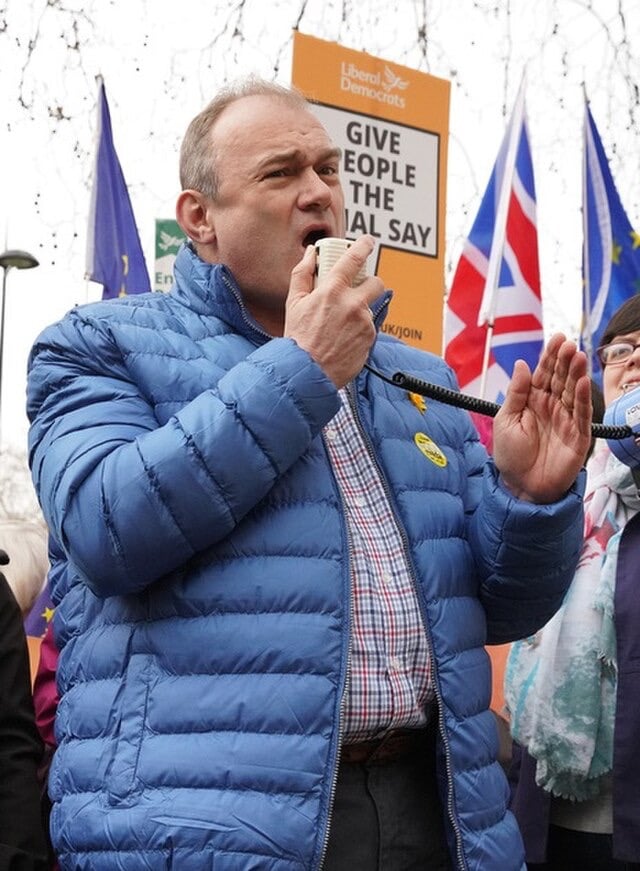
Ed Davey’s Liberal Democrats are polling fourth nationally at around 12 per cent in early February aggregates, behind Reform, Labour and the Conservatives but holding steady and remaining competitive with the Greens. PollCheck’s 7 February average placed them on 12.3 per cent vote intention.
MRP seat projections estimate the party would win between 40 and 50 seats, sufficient to make them kingmakers in a hung parliament scenario. Davey personally leads in likability among party leaders with 31 per cent favourable ratings, tied with Zack Polanski and outperforming both Starmer and Badenoch, though only between eight and 17 per cent see him as Prime Minister material.
Coalition polling shows a Labour-Liberal Democrat government with Davey as Prime Minister as the “least unpopular” option, with 36 per cent support compared to 45 per cent opposed. This performs better than other potential coalition pairings tested by pollsters.
The party’s position builds on their record 2024 performance when they won 72 seats, the highest for a third party since 1923. Davey’s stunt-heavy campaign and tactical focus on southern “Blue Wall” constituencies delivered massive gains. His unopposed re-election as leader and 2025 local election victories, where Liberal Democrats beat the Conservatives in both seats and votes, cemented their status as the “party of Middle England.”
Davey has positioned the Liberal Democrats in direct opposition to Reform, pledging to “wipe the smile off his face” and “stop Trump’s America becoming Farage’s Britain.” The party targets southern Conservative holdouts and northern Labour switchers with pro-Europe, NHS and social care pledges.
However, recognition issues persist, with 37 per cent unable to identify Davey, whilst coalition baggage from the 2010-2015 period limits broader appeal. The party polls well on trust regarding councils and environmental issues but trails on the economy and immigration, splitting the progressive vote with the Greens in some constituencies.
Davey’s refusal to rule coalition arrangements in or out, including potential pacts with Labour to block Reform, boosts kingmaker appeal without alienating the base. The May 2026 local elections are positioned as a test for “big gains” against the Conservatives in the south and Labour in the north and Midlands.
Who Would Actually Govern Britain?
If current polling translated into election results, Reform UK would likely form a majority government with Nigel Farage as Prime Minister. Electoral Calculus projects them winning 335 seats, providing a majority of 20 even after tactical voting against them. More in Common’s model suggests an even larger majority of 112 with 381 seats.
However, Britain’s first-past-the-post electoral system creates uncertainty. Reform’s vote is less efficiently distributed than traditional parties, and MRP models rely on assumptions about tactical voting that may not materialise. YouGov’s lower Reform numbers suggest potential volatility, with their 24 per cent support potentially insufficient for a majority depending on how votes fall in individual constituencies.
If Reform fell short of a majority, coalition mathematics become complex. The party’s 335-seat projection from Electoral Calculus would still likely enable minority government, as no combination of other parties could command a majority without including Reform.
A “Stop Reform” coalition of Labour (41 seats), Conservatives (92 seats), Liberal Democrats (40-50 seats) and Greens (52 seats) would total approximately 225-235 seats, well short of the 326 required for a majority in a 650-seat parliament. Such a coalition would face enormous ideological tensions between Labour-Green progressives and Conservative free-marketeers.
The most stable non-Reform government would require Conservative-Labour “grand coalition” cooperation, historically unprecedented in peacetime British politics. Ed Davey’s Liberal Democrats would hold kingmaker status but could not provide sufficient seats to create a majority without both major parties.
If Reform won a narrow majority as Electoral Calculus projects, Farage would become Prime Minister leading a single-party government. His cabinet would likely draw from Reform’s small parliamentary cohort plus high-profile Conservative defectors including Nadhim Zahawi and Lee Anderson.
A Reform government would face immediate challenges implementing its agenda. The party’s readiness for government remains questioned by 58 per cent of voters, with critics highlighting policy depth beyond immigration and concerns about administrative capacity to run Whitehall departments.
What Happens Next: The May Elections Test
The upcoming May 2026 local elections are positioned as a critical verdict on all parties and particularly on Keir Starmer’s survival as Labour leader. Analysts describe the contests as a “majority test” for Reform’s claims to government readiness and a potential “breakthrough” for the Greens, especially in the Wales Senedd.
Liberal Democrats are targeting “big gains” against Conservatives in southern England and Labour in northern and Midlands constituencies. For the Conservatives, the elections represent an opportunity to demonstrate they can claw back support from Reform and remain relevant as a national party.
Labour faces potential devastation if current polling translates to local results. With over half the public saying Starmer should resign and party members indicating they would prefer alternative leaders, poor May results could trigger a leadership crisis. Internal Labour polling already shows deep rifts, and a historic defeat could force Starmer’s hand.
For Reform, strong local election performance would validate their national polling and demonstrate they can convert support into elected officials beyond Westminster. Weak results might expose the gap between polling strength and actual voting behaviour, potentially deflating their momentum heading into a general election.
The political volatility means predictions remain uncertain. Eighteen months transformed Labour’s landslide into potential oblivion whilst elevating Reform from fringe status to pole position. The next three months until May will reveal whether current polling represents a fundamental realignment of British politics or a moment of protest that could reverse as quickly as it developed.
What remains clear is that if a general election were held today, Britain would likely wake up to Nigel Farage as Prime Minister, the Greens as His Majesty’s official opposition displacing Labour, and a political landscape unrecognizable from the 2024 result that brought Keir Starmer to Downing Street with a commanding majority.
