



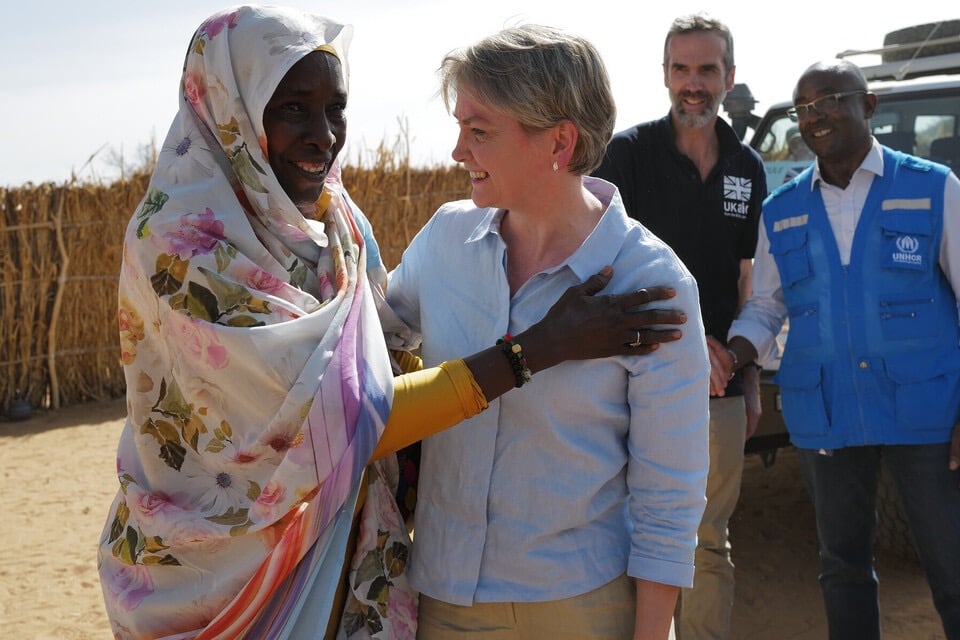
Foreign Secretary Yvette Cooper has delivered a damning assessment of the global response to sexual violence in Sudan, stating the international community has failed to protect women and girls during nearly three years of conflict.
Speaking during a visit to Adré on the Sudanese border in Chad on Tuesday, Cooper described the world turning its back on “horrendous” stories of brutal attacks, sexual torture and public rape used as weapons against fleeing populations.
The Foreign Secretary called for urgent international action to secure a ceasefire and demanded all nations pressure warring parties to halt what she characterised as a war waged on women’s bodies.
Sudan’s conflict, which has lasted more than 1,000 days, represents the largest humanitarian catastrophe of the 21st century according to British officials. Famine is spreading, infrastructure has collapsed, and 12 million people have been displaced. Evidence indicates unprecedented levels of sexual violence, sexual slavery and abductions targeting women and children.
Cooper stated: “The world must not look away. The international community has failed the women of Sudan. The stories of brutal attacks, sexual torture, public rape used as weapons in conflict against fleeing women and children are truly horrendous. This is a war waged on women’s bodies. Yet too often these stories are not heard, and the world turns its back.”
Britain has responded by announcing £20 million in emergency funding to provide medical and psychological support for survivors of conflict-related sexual violence. The package will connect victims with frontline services whilst equipping communities with resources to combat stigma faced by survivors and children born from rape.
During her Chad visit, Cooper toured a UK-funded hospital treating sexual violence survivors, witnessing firsthand the impact of the crisis on women and girls. She pledged the UK would maintain international spotlight on events in Sudan and would not look away from the atrocities.
The war has created the world’s largest displacement crisis, with 1.2 million refugees fleeing to Chad alone. This exodus directly impacts the security and stability of Sudan’s neighbours, with implications extending across regions.
Cooper held discussions with Foreign Ministers from Ethiopia, Kenya, South Sudan and Chad, alongside the African Union’s Chairperson and Peace and Security Commissioner. The meetings addressed coordination with border nations, working alongside the US-led Quad and international community to pursue an urgently needed ceasefire.
The Foreign Secretary emphasised that Sudan’s conflict affects security and migration patterns far beyond immediate neighbours, arguing the crisis requires collective global response. She committed to relentless efforts keeping international attention focused on the humanitarian catastrophe.
The £20 million funding will comprehensively improve quality of frontline services and implement long-term preventative measures against violence targeting women and girls. Implementation will proceed through established humanitarian channels with monitoring to ensure effective delivery across affected areas.
Cooper’s visit and funding announcement signal intensified British diplomatic efforts to galvanise global action on what officials describe as the greatest humanitarian crisis facing the world. Coordination with regional partners and international bodies continues as pressure builds for ceasefire negotiations and humanitarian access.
